

Understanding Anti-Malarial Treatment: Myths vs. Facts
This content is intended for general educational purposes only and should not replace professional medical advice. Individuals should consult qualified healthcare professionals for diagnosis and treatment.
Malaria remains one of the most significant infectious disease threats in the world. In 2023 alone, the World Health Organization recorded over 249 million malaria cases globally, with the overwhelming majority occurring in sub-Saharan Africa. Children under the age of five bear the greatest burden, accounting for nearly 80% of malaria-related deaths in the region.
Despite decades of progress in prevention, diagnosis, and treatment, malaria continues to be surrounded by misconceptions that delay care, encourage unsafe self-treatment, and undermine public health efforts. Separating myth from fact is not merely an educational exercise — it can be the difference between life and death.
What Is Malaria?
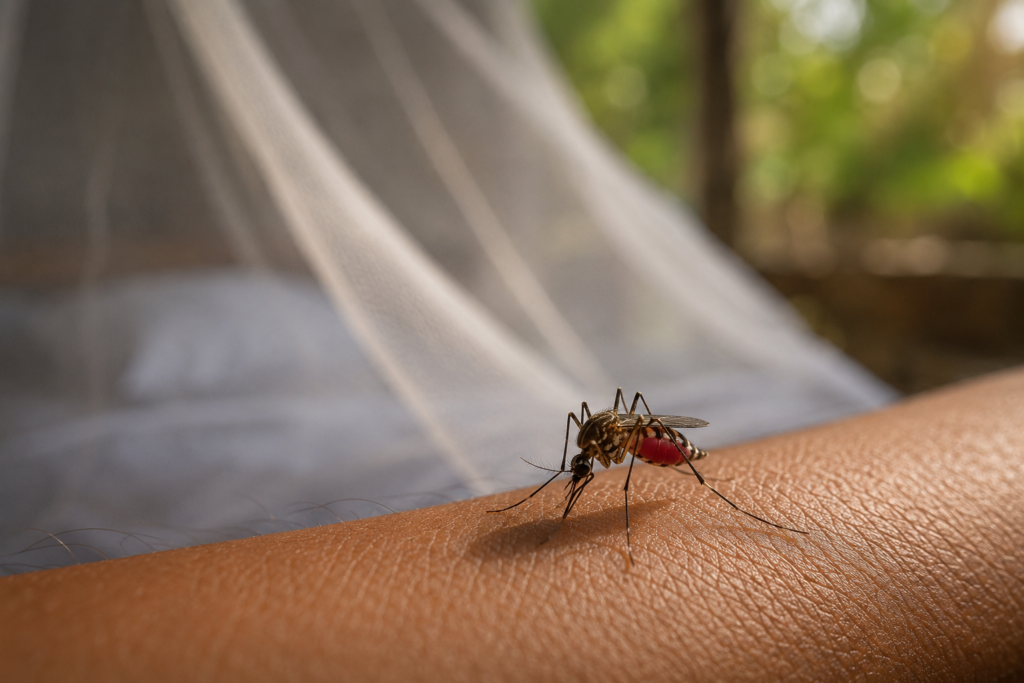
Malaria is a life-threatening disease caused by Plasmodium parasites, transmitted to humans through the bite of infected female Anopheles mosquitoes. There are five species of Plasmodium that infect humans, of which P. falciparum is the most dangerous and most prevalent in Africa, and P. vivax is the most widespread globally.
Symptoms typically appear 10–15 days after an infected mosquito bite and include fever, chills, headache, muscle aches, nausea, and fatigue. In severe cases — particularly with P. falciparum — the disease can progress rapidly to cerebral malaria, severe anaemia, organ failure, and death.
Common Myths — and the Facts
Myth 1: ‘Malaria is just a bad fever — it will pass on its own.’
Fact: Malaria is a medical emergency, not a self-limiting illness. While mild cases may improve with supportive care, P. falciparum malaria in particular can progress from moderate symptoms to severe, life-threatening complications within 24–48 hours. Immediate diagnosis and treatment with appropriate antimalarial medicines is essential.
Myth 2: ‘You cannot get malaria if you have had it before — you become immune.’
Fact: Partial immunity to malaria develops after repeated infections over many years in high-transmission areas. However, this immunity is not complete or permanent. It reduces the severity of illness in adults who have grown up in endemic regions but does not prevent infection. People who move away from endemic areas — or who are immunocompromised — can experience severe malaria even if they have had the disease before.
Myth 3: ‘Herbal remedies can cure malaria effectively.’
Fact: While artemisinin — the active compound in Artemisia annua plant — forms the basis of WHO-recommended Artemisinin-based Combination Therapies (ACTs), simply consuming the plant as a herbal tea does not deliver a consistent, therapeutic dose. Self-treatment with unregulated herbal preparations delays access to proven medication and risks treatment failure and drug resistance. Approved antimalarial medications provide standardised, quality-controlled doses proven to eliminate the parasite.
Myth 4: ‘Antimalarial drugs are too strong and harmful to the body.’
Fact: WHO-recommended antimalarial medicines, when taken at the correct dose and for the full recommended duration, are safe and well-tolerated for the vast majority of patients. Side effects are generally mild and transient. The risk of not treating malaria far outweighs the manageable risks associated with approved medicines.
Myth 5: ‘Mosquito nets are enough — medication is unnecessary.’
Fact: Insecticide-treated mosquito nets (ITNs) are highly effective at preventing malaria and are one of the most important tools available. However, they are a preventive measure, not a treatment. If an infection occurs despite preventive measures, prompt antimalarial treatment is essential. Prevention and treatment work together; neither alone is sufficient.
WHO-Recommended Antimalarial Treatments
The World Health Organization recommends Artemisinin-based Combination Therapies (ACTs) as the first-line treatment for uncomplicated P. falciparum malaria. These include combinations such as artemether-lumefantrine, artesunate-amodiaquine, and dihydroartemisinin-piperaquine. For severe malaria, injectable artesunate is the recommended treatment.
For P. vivax malaria, chloroquine remains effective in most regions, combined with primaquine to eliminate dormant liver-stage parasites (hypnozoites) and prevent relapse.
The Threat of Drug Resistance
Antimalarial drug resistance is a growing global threat. Resistance to artemisinin has been confirmed in Southeast Asia and, more recently, detected in parts of Africa. This underscores the critical importance of completing the full course of prescribed treatment — stopping early reduces parasite clearance and accelerates the development of resistance. It also highlights the need for ongoing investment in new antimalarial drug development and surveillance.
Prevention Remains Paramount
- Sleep under insecticide-treated bed nets (ITNs) every night.
- Apply insect repellent to exposed skin in the evening hours.
- Eliminate standing water around homes — it is the primary mosquito breeding ground.
- Seek prompt diagnosis at a healthcare facility if fever develops.
- For travellers to endemic areas, consult a healthcare professional about prophylactic medication.
Key Takeaways
✔ Malaria is a medical emergency requiring immediate diagnosis and treatment.
✔ Partial immunity exists in endemic populations but does not prevent infection.
✔ Herbal remedies are not a substitute for WHO-approved antimalarial medications.
✔ ACTs are the globally recommended first-line treatment for P. falciparum malaria.
✔ Completing the full treatment course is essential to prevent drug resistance.
References
1. World Health Organization — World Malaria Report 2023 — https://www.who.int/teams/global-malaria-programme/reports/world-malaria-report-2023
2. WHO — Guidelines for the Treatment of Malaria (3rd Edition) — https://www.who.int/publications/i/item/9789241549127
3. Malaria Consortium — Malaria Facts and Myths — https://www.malariaconsortium.org
4. CDC — Malaria Treatment — https://www.cdc.gov/malaria/treatment