

Excellence in Manufacturing
Optimizing manufacturing excellence for superior pharmaceutical solutions.

Pharmaceutical Manufacturing Infrastructure
The Manufacturing facilities designed to meet international GMP standards and support multi-market product registration. Facility specifications incorporate requirements from WHO guidelines, PIC/S recommendations, and target market regulatory frameworks.
Planned capabilities include controlled manufacturing environments, analytical laboratories, and quality control systems structured to support regulatory inspections and commercial production scale. Equipment selection prioritizes reliability, validation feasibility, and alignment with planned product portfolio requirements.
Facility design addresses three operational priorities: regulatory compliance for market access, production efficiency for commercial viability, and quality systems for consistent output. Construction and commissioning timelines will determine when these capabilities become operational.
GMP-compliant facility design
Multi-dosage form production capability
Integrated quality control
Automation Efficiency
Automation in Manufacturing Operations
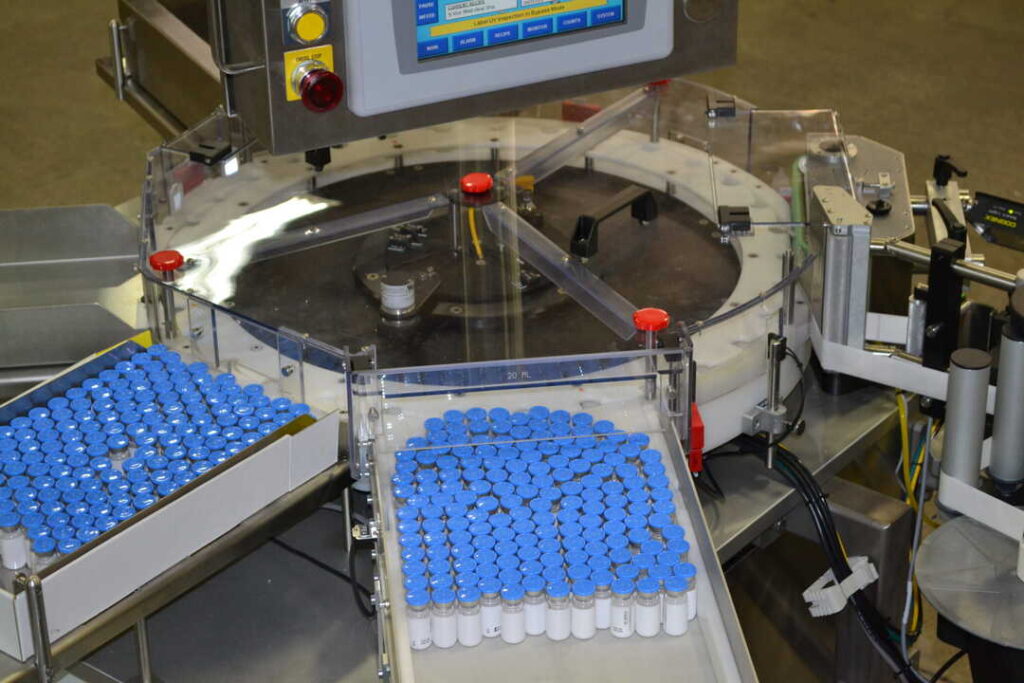
The Manufacturing facilities incorporates automation where it improves process control, reduces variability, or increases throughput. Automated systems are deployed in material handling, dosing operations, filling lines, and packaging processes based on production volume and complexity requirements.
Automation provides consistent execution of repetitive tasks and generates process data that supports quality monitoring. Equipment performs to programmed parameters, reducing operator-dependent variation in critical process steps.
The degree of automation varies by process. High-volume production lines justify greater automation investment. Lower-volume or more complex operations may retain manual steps where flexibility is needed. Automation decisions follow operational logic: deploy technology where it delivers measurable improvement in quality, efficiency, or capacity.
Automation Applications: Material dispensing, tablet compression monitoring, automated inspection systems, packaging line controls
High Capacity to Multiform Capacity
Massive Manufacturing Capacity
The manufacturing facilities are configured to manufacture multiple dosage forms: oral solids (tablets, capsules), injectables, topicals (creams, ointments), ophthalmic/otic solutions, and oral liquids. Production lines are scaled to support both development batches and commercial volumes.
Capacity planning balances product mix requirements with equipment utilization. Different dosage forms require distinct manufacturing environments and equipment sets—solid oral dosage production differs substantially from sterile injectable manufacturing in terms of facility design and process controls.
Production scheduling accommodates varying batch sizes and product changeovers while maintaining equipment availability for market demand. Capacity isn’t fixed—it’s a function of product mix, batch frequency, and operational efficiency at any given time.

Diverse Expertise
Therapeutic Area Coverage
Biofiya Healthcare’s product portfolio spans multiple therapeutic categories: cardiovascular, anti-diabetic, anti-hypertensive, anti-coagulant, anti-viral, anti-malarial, and oncology medications. This range reflects market demand patterns and manufacturing capability across different drug classes.
Product development prioritizes therapeutic areas where generic competition serves public health needs—chronic disease management, infectious disease treatment, and essential medication access. Formulation work addresses stability challenges, bioavailability requirements, and manufacturing feasibility specific to each drug class.
Therapeutic diversity requires different handling protocols, analytical methods, and regulatory expertise. Oncology products demand specialized containment during manufacturing. Injectable anti-coagulants require sterile processing. Each category presents distinct technical and regulatory considerations.
Portfolio breadth allows distribution partners to source multiple product categories from a single manufacturer, simplifying supply chain management and quality oversight.
Therapeutic Categories:
Cardiovascular | Diabetes | Hypertension | Anticoagulation | Antiviral | Antimalarial | Oncology etc

Delivery
Supply Chain and Delivery Management
Pharmaceutical supply chains operate under specific constraints: temperature control requirements, regulatory documentation, and shelf-life considerations. Biofiya Healthcare coordinates production scheduling, inventory management, and logistics to meet contractual delivery commitments.
Lead times vary by product complexity, order volume, and destination market requirements. Standard products with established production schedules typically ship within agreed timeframes. Custom formulations or first-time orders require longer lead times for manufacturing setup and quality release.
Delivery performance affects client operations—stockouts disrupt patient care, while excess inventory ties up working capital. Supply reliability influences purchasing decisions as much as price or quality specifications.
Logistics partners are selected based on their capability to handle pharmaceutical products appropriately, including cold chain management where required and documentation accuracy for customs clearance.

Quality Consistency
Batch-to-Batch Consistency
Pharmaceutical manufacturing targets reproducible results—each batch should meet the same specifications as the last. Achieving this requires controlled process parameters, validated equipment, and raw materials that fall within acceptance ranges.
Process validation demonstrates that manufacturing procedures produce consistent outcomes when followed correctly. Critical process parameters are monitored during production, and out-of-specification results trigger investigation to identify root causes.
Variability still occurs despite controls—raw material lots differ slightly, environmental conditions fluctuate, and equipment performance drifts over time. Quality systems are designed to detect these variations early and determine whether they fall within acceptable limits or require corrective action.
Analytical testing of finished batches provides the final verification that products meet release specifications. Trending of test results over time reveals whether processes are maintaining their validated state or drifting toward specification limits.
Consistency isn’t guaranteed—it’s maintained through systematic process control and continuous monitoring.

GMP Compliance
GMP-Compliant Manufacturing Operations
The manufacturing facilities operate under Good Manufacturing Practice guidelines as required for pharmaceutical manufacturing authorization. GMP compliance is verified through regulatory inspections conducted by authorities in markets where products are registered.
GMP requirements cover facility design, equipment qualification, process validation, personnel training, documentation practices, and quality systems. These aren’t aspirational standards—they’re baseline regulatory requirements for legal pharmaceutical manufacturing.
Maintaining GMP status requires ongoing compliance with established procedures, timely investigation of deviations, and implementation of corrective actions when issues arise. Regular internal audits assess compliance before regulatory inspections occur.
GMP certification isn’t a competitive advantage—it’s a prerequisite for market participation. Manufacturers without GMP approval cannot legally supply pharmaceutical products to regulated markets.
CECMED Approved Plant (Facility) in India – Cuba
PROMESS Approved Plant (Facility) in India – Haiti
ANMAT Approved Plant (Facility) in India – Argentina
ISPCH Approved Plant (Facility) in India – Chile
INVIMA Approved Plant (Facility) in India – Colombia
ARCSA Approved Plant (Facility) in India – Ecuador
DIGEMID Approved Plant (Facility) in India – Peru
European Medicines Agency (EMA) Approved Plant (Facility) in India – Europe
ANSM Approved Plant (Facility) in India – France
SMCA Approved Plant (Facility) in India – Lithuania
NAMMD Approved Plant (Facility) in India – Romania
Icelandic Medicines Agency Approved Plant (Facility) in India – Iceland
Kosovo Medicines Agency Approved Plant (Facility) in India – Kosovo
Norwegian Medicines Agency Approved Plant (Facility) in India – Norway
Swiss Agency for Therapeutic Products Approved plant (Facility) in India – Switzerland
Turkish Medicines and Medical Devices Agency Approved plant (Facility) in India – Turkey
SCDMTE Approved plant (Facility) in India – Armenia
SFDA Approved plant (Facility) in India – Saudi Arabia
DPMED Approved plant (Facility) in India – Benin
DPML Approved plant (Facility) in India – Burundi
FDA Cameroon Approved plant (Facility) in India – Cameroon
ARFA Approved plant (Facility) in India – Cape Verde
FDA Ghana Approved plant (Facility) in India – Ghana
MoH Gambia Approved Plant (Facility) in India – Gambia
AIRP Approved plant (Facility) in India – Ivory Coast
PPB Kenya Approved plant (Facility) in India – Kenya
MOH Liberia Approved plant (Facility) in India – Liberia
NAFDAC Approved plant (Facility) in India – Nigeria
MOHD Approved plant (Facility) in India – Somalia
NMPB Sudan Approved plant (Facility) in India – Sudan
GDPA Approved plant (Facility) in India – Afghanistan
TGA Australia approved nutraceutical plant (Facility) in India – Australia
FDA Myanmar Approved plant (Facility) in India – Myanmar
MOH of Tajikistan -Tajikistan
Quality assurance
Ensuring meticulous quality assurance throughout our processes at Biofiya Healthcare.
Customer satifaction
Ensuring customer satisfaction through dedicated service and quality products.
Quality standards
We uphold stringent quality control processes to ensure every product meets the highest safety and efficacy standards.