
Diabetes Management in Developing Countries: The Access Gap
This content is intended for general educational purposes only and should not replace professional medical advice. Individuals should consult qualified healthcare professionals for diagnosis and treatment.
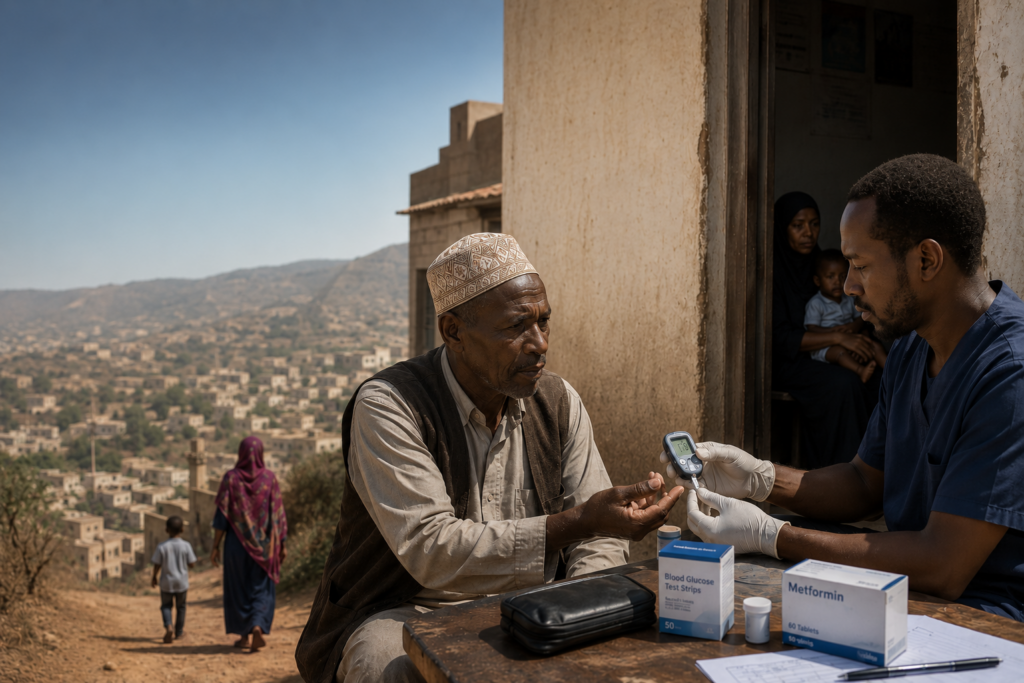
Diabetes is one of the fastest-growing public health challenges of our time. While it affects people across the globe, the burden falls disproportionately on low- and middle-income countries (LMICs), where access to essential medicines, diagnostic tools, and specialist care remains limited. According to the International Diabetes Federation, over 75% of people living with diabetes reside in LMICs — yet many go undiagnosed or undertreated for years.
The consequences are severe: uncontrolled diabetes leads to complications including cardiovascular disease, kidney failure, blindness, and lower-limb amputation. These are not inevitable outcomes — they are the result of a persistent access gap that must be addressed urgently.
Understanding the Access Gap
The ‘access gap’ in diabetes care refers to the chasm between what is medically possible and what is practically available to patients in developing regions. It manifests in several ways:
- Lack of affordable insulin and oral hypoglycaemics in rural pharmacies and public health facilities.
- Limited diagnostic infrastructure — blood glucose monitors, HbA1c testing, and trained technicians are rare in many district hospitals.
- Shortage of endocrinologists and diabetes educators in primary care settings.
- Low health literacy, resulting in delayed help-seeking behaviour and poor adherence to treatment.
- Fragmented healthcare systems that do not integrate chronic disease management into routine care.
The Situation in Africa and the Middle East
Sub-Saharan Africa faces some of the steepest challenges. Type 2 diabetes, once considered a disease of affluence, is rising sharply as urbanisation changes dietary habits and physical activity levels. Nations including Nigeria, Ethiopia, and South Africa are grappling with a dual burden — managing infectious diseases while addressing a surge in non-communicable conditions.
In the Middle East and North Africa (MENA) region, the prevalence of diabetes is among the highest in the world. Countries such as Saudi Arabia, UAE, and Kuwait report rates exceeding 15% in the adult population. Despite relatively stronger health systems compared to sub-Saharan Africa, rural and lower-income communities within these nations often lack consistent access to insulin storage, continuous glucose monitoring, and specialised care.
What Does Effective Management Require?
Managing diabetes effectively requires a combination of pharmacological treatment, lifestyle modification, and regular monitoring. The core elements include:
Pharmacological Treatment
- Oral medications such as metformin remain the first-line treatment for Type 2 diabetes and are relatively low-cost.
- Insulin — essential for Type 1 diabetes and many advanced Type 2 cases — requires cold storage, making distribution in warm climates a logistical challenge.
- Newer drug classes such as GLP-1 receptor agonists offer significant benefits, but high cost limits their availability in developing regions.
Lifestyle and Dietary Changes
- Reducing refined carbohydrate intake and increasing physical activity can significantly improve blood glucose control.
- Community-based education programmes have shown measurable impact in improving health outcomes at low cost.
Regular Monitoring
- Self-monitoring of blood glucose helps patients track their response to treatment.
- Routine HbA1c tests every 3–6 months help clinicians assess longer-term control.
The Role of Generic Medicines and Affordable Pharmaceuticals
One of the most powerful tools in closing the access gap is the widespread availability of high-quality, affordable generic medicines. Generic versions of metformin, glibenclamide, and other essential antidiabetics have the same active ingredients and therapeutic effect as their branded counterparts, at a fraction of the cost.
Pharmaceutical companies committed to WHO-GMP and EU-GMP quality standards play a crucial role in ensuring that generic medicines reaching these markets are safe, effective, and consistently manufactured. Access to verified-quality generics is not a compromise — it is a cornerstone of equitable healthcare.
Key Takeaways
✔ Over 75% of people with diabetes live in low- and middle-income countries.
✔ The access gap includes medicine availability, diagnostics, trained staff, and health literacy.
✔ Africa and the MENA region face particularly high diabetes burdens.
✔ Affordable, quality-certified generic medicines are essential to closing the gap.
✔ Community education and integrated primary care approaches improve outcomes.
References
1. International Diabetes Federation — IDF Diabetes Atlas (10th Edition) — https://www.diabetesatlas.org
2. World Health Organization — Diabetes Fact Sheet — https://www.who.int/news-room/fact-sheets/detail/diabetes
3. The Lancet — Diabetes in sub-Saharan Africa — https://www.thelancet.com/diabetes-endocrinology
4. MENA Diabetes Leadership Forum — https://www.idf.org/our-network/regions-members/middle-east-and-north-africa