

Preventive Healthcare in Low-Income Countries: Why Affordability is the First Step
This content is intended for general educational purposes only and should not replace professional medical advice. Individuals should consult qualified healthcare professionals for diagnosis and treatment.
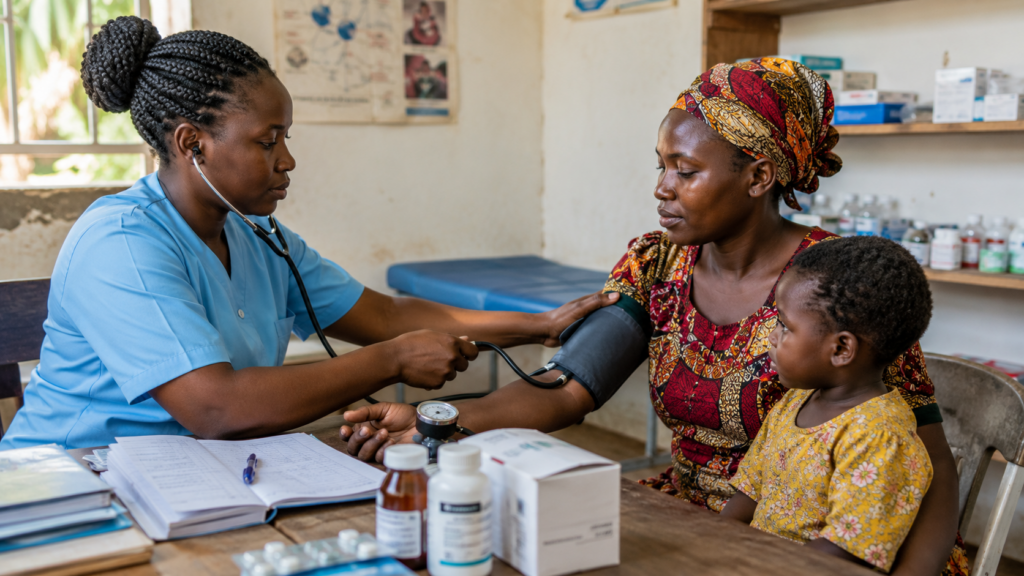
Prevention is one of medicine’s most powerful tools. Vaccinating a child against measles, treating a pregnant mother’s iron deficiency, or managing a farmer’s blood pressure with affordable medication — these are acts of prevention that avert illness, disability, and death before they occur. They are also among the most cost-effective interventions in all of healthcare.
Yet in low-income countries (LICs) and low-middle-income countries (LMICs), preventive healthcare remains chronically underfunded, underdelivered, and undervalued. The primary barrier is not always knowledge or will — it is affordability. When a family must choose between preventive care and daily food, prevention loses. When a health ministry must choose between treating today’s emergencies and funding tomorrow’s screening programme, emergencies win.
Closing the preventive health gap in the world’s poorest countries requires a clear-eyed understanding of what makes prevention inaccessible — and what practical steps can change it.
What Is Preventive Healthcare?
Preventive healthcare encompasses all interventions aimed at reducing the incidence, severity, or consequences of disease before it fully develops. It is commonly divided into three tiers:
- Primary prevention — preventing disease onset altogether. Examples: vaccination, health education, nutrition supplementation, smoking cessation programmes.
- Secondary prevention — detecting disease early, before symptoms cause harm. Examples: blood pressure screening, cervical cancer screening, TB contact tracing.
- Tertiary prevention — managing established disease to prevent complications and deterioration. Examples: diabetes management to prevent kidney failure, antiretroviral therapy to prevent AIDS progression.
All three levels matter — and in LICs, all three are underfunded.
The Core Barriers to Preventive Healthcare in Low-Income Settings
1. Cost of Medicines and Supplies
Even the most cost-effective preventive medicines — iron supplements, antihypertensives, antimalarials, antiretrovirals — are financially out of reach for significant portions of the population in LICs when priced at branded rates. Out-of-pocket health expenditure in these countries can push families into poverty with a single serious illness. Preventive medicines, by contrast, offer no visible immediate benefit — making it harder for patients to justify the cost.
2. Geographic Inaccessibility
In rural and remote communities — which house the majority of LIC populations — health facilities may be hours away by foot. Supply chains that cannot reach the ‘last mile’ mean that even where medicines are affordable, they may simply be unavailable. Stock-outs of essential preventive supplies are endemic in many district health systems.
3. Low Health Literacy
Understanding the value of prevention requires a degree of health literacy that is unevenly distributed. Communities with low literacy rates, limited media access, and little formal education are less likely to seek preventive services, vaccinations, or routine health checks — even when these are offered at low or no cost.
4. Inadequate Health Worker Density
The WHO recommends a minimum of 4.45 health workers per 1,000 population to achieve basic health coverage. Many LICs fall far below this threshold. Insufficient community health workers and clinic staff means that preventive services — particularly those requiring counselling, testing, and follow-up — cannot reach the people who need them most.
5. Systemic Prioritisation of Curative over Preventive Care
Health systems in LICs are typically reactive — built around treating illness rather than preventing it. Budget allocations, infrastructure investment, and workforce training all tend to prioritise curative care. Preventive programmes, which often show returns over years or decades, are difficult to justify politically in environments of immediate resource scarcity.
Why Affordability is the First — and Most Critical — Step
Of all the barriers listed above, affordability sits at the foundation. Geographic inaccessibility can be addressed through supply chain innovation. Health literacy can be improved through community education. Workforce density can be addressed through task-shifting to community health workers. But none of these improvements matter if the medicines, vaccines, and supplies at the centre of prevention are priced out of reach.
Making preventive healthcare affordable requires action at multiple levels:
- Generic medicine availability — ensuring that off-patent preventive medicines (iron supplements, antihypertensives, antimalarials, vitamins, ORS) are produced by certified generic manufacturers at accessible prices.
- Tiered pricing — pharmaceutical companies and international health bodies applying price differentiation based on national income levels.
- National insurance and subsidy schemes — governments including preventive medicines in essential medicines lists and subsidising them through national health programmes.
- Donor-funded supply chains — international health organisations (UNICEF, the Global Fund, PEPFAR) procuring and distributing preventive medicines at scale.
The Multiplier Effect of Prevention
Investment in preventive healthcare generates returns that extend far beyond individual patient outcomes. Preventing childhood malaria reduces school absenteeism and supports educational attainment. Managing maternal anaemia during pregnancy improves birth outcomes and infant survival. Treating hypertension prevents strokes that would otherwise require expensive acute care and leave patients permanently disabled.
The World Bank estimates that every dollar invested in preventive health in LMICs generates between $3 and $20 in economic returns. Prevention does not compete with development — it enables it.
Biofiya’s Role in Preventive Healthcare Access
As a WHO-GMP and EU-GMP certified pharmaceutical supplier with a focus on Africa, the Middle East, and CIS markets, Biofiya Healthcare is directly engaged in the preventive healthcare access challenge. By supplying quality-certified, affordable generic medicines across therapeutic areas including cardiovascular health, diabetes management, infectious disease prevention, and nutritional supplementation, Biofiya contributes to the infrastructure of preventive care in markets where access has historically been limited.
We believe that quality and affordability are not opposing values — they are the twin pillars of responsible pharmaceutical supply. Every medicine we deliver to a patient who could not previously afford it is a step toward the vision of healthcare that is accessible to everyone, everywhere.
Key Takeaways
✔ Preventive healthcare reduces illness before it occurs — and is among the most cost-effective medical investment available.
✔ The primary barrier to prevention in LICs is affordability — not knowledge or technology.
✔ Affordable, quality-certified generic medicines are foundational to any preventive health strategy.
✔ Every dollar invested in prevention in LMICs returns $3–$20 in economic benefit.
✔ Integrated approaches — medicines, supply chains, community health workers, and health literacy — are needed together.
References
1. World Health Organization — Primary Health Care and Health Promotion — https://www.who.int/health-topics/primary-health-care
2. World Bank — Investing in Health — https://www.worldbank.org/en/topic/health
3. The Lancet — Universal Health Coverage and Preventive Care in LMICs — https://www.thelancet.com
4. UNICEF — Essential Medicines and Child Survival — https://www.unicef.org/health/essential-medicines