
Cancer Care in Africa: Bridging the Oncology Access Gap
This content is intended for general educational purposes only and should not replace professional medical advice. Individuals should consult qualified healthcare professionals for diagnosis and treatment.
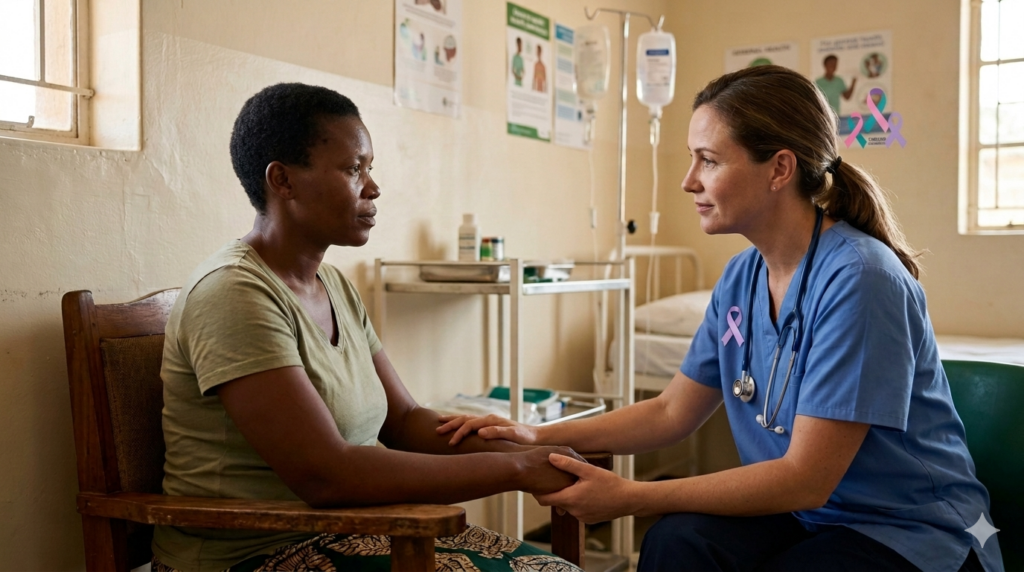
Cancer is rapidly becoming one of Africa’s most pressing healthcare challenges. Once overshadowed by infectious diseases such as malaria, HIV/AIDS, and tuberculosis, cancer is now the third leading cause of death on the continent and is projected to become the leading cause by 2030 if current trends continue.
The tragedy is not merely the rising incidence — it is that the majority of African cancer patients are diagnosed at advanced stages when curative treatment is rarely possible, and access to life-saving oncology medicines remains deeply unequal.
The Burden of Cancer in Africa
The World Health Organization estimates that Africa accounts for approximately 7% of global cancer cases but nearly 10% of cancer deaths — a disproportionate mortality rate that reflects the structural inequities in cancer care across the continent.
The most common cancers in Africa include:
- Breast cancer — the most frequently diagnosed cancer among women across sub-Saharan Africa.
- Cervical cancer — rates are among the highest in the world, driven by limited access to HPV vaccination and screening.
- Prostate cancer — the most common cancer among men in much of the continent.
- Liver cancer — closely linked to hepatitis B and C infections, which remain highly prevalent.
- Colorectal cancer — rising in parallel with dietary and lifestyle transitions in urban areas.
Why Is the Access Gap So Wide?
Numerous structural, financial, and systemic barriers prevent African patients from receiving timely, effective cancer care:
Diagnostic Delays
Most African countries lack adequate pathology infrastructure, imaging technology (CT, MRI, PET), and trained oncologists. Many patients travel hundreds of kilometres to reach a facility capable of diagnosing their cancer — by which point the disease has frequently progressed.
Cost of Treatment
Innovative cancer therapies — immunotherapy, targeted therapy, and newer chemotherapy regimens — are prohibitively expensive for the vast majority of African patients. Even older, established chemotherapy agents can be out of reach in countries with limited public healthcare budgets.
Limited Radiotherapy Infrastructure
Sub-Saharan Africa has fewer than 100 radiotherapy machines for over one billion people. Many countries have none at all. Radiotherapy is essential for curative treatment of several common cancers, yet its absence forces patients to forgo treatment entirely.
Human Resources
There is an acute shortage of oncologists, haematologists, oncology nurses, and palliative care specialists across the continent. Training programmes remain underfunded and specialists frequently emigrate to higher-income countries.
What Is Being Done?
Despite these challenges, meaningful progress is being made through collaborative effort:
- The African Cancer Coalition and similar bodies are advocating for increased government investment in cancer programmes.
- Generic oncology medicines manufactured to international quality standards are making essential chemotherapy agents more accessible.
- HPV vaccination programmes, supported by international health organisations, are helping to prevent cervical cancer among young women.
- Telemedicine and digital pathology platforms are beginning to bridge specialist gaps in remote regions.
- The WHO Model List of Essential Medicines now includes a broader range of oncology drugs, pushing governments to include them in national health programmes.
The Importance of Quality-Certified Generic Oncology Medicines
For many African nations, access to generic oncology medicines — manufactured to WHO-GMP or EU-GMP standards — represents the most immediate, scalable pathway to expanding cancer care. These medicines carry the same therapeutic efficacy as originator products and are subject to rigorous quality controls that ensure patient safety.
Pharmaceutical suppliers committed to quality certification and affordable pricing play a direct role in enabling healthcare systems to provide chemotherapy and supportive oncology care that would otherwise be out of reach. Every quality-assured generic medicine that reaches an African patient represents a real opportunity to improve survival outcomes.
Key Takeaways
✔ Africa accounts for a disproportionately high share of global cancer deaths relative to its incidence.
✔ Breast, cervical, prostate, and liver cancers are the most prevalent on the continent.
✔ Diagnostic delays, treatment costs, and limited radiotherapy infrastructure are the core barriers.
✔ Generic oncology medicines, manufactured to international standards, are critical to improving access.
✔ HPV vaccination and early screening programmes offer the strongest prevention opportunities.
References
1. World Health Organization — Cancer in Africa — https://www.who.int/news-room/fact-sheets/detail/cancer
2. International Agency for Research on Cancer (IARC) — Africa Cancer Data — https://gco.iarc.fr
3. The Lancet Oncology — Cancer in sub-Saharan Africa — https://www.thelancet.com/oncology
4. African Cancer Coalition — https://www.africancancercoalition.org